




Blog
Chitosan in winemaking: a natural antimicrobial and clarifying agent

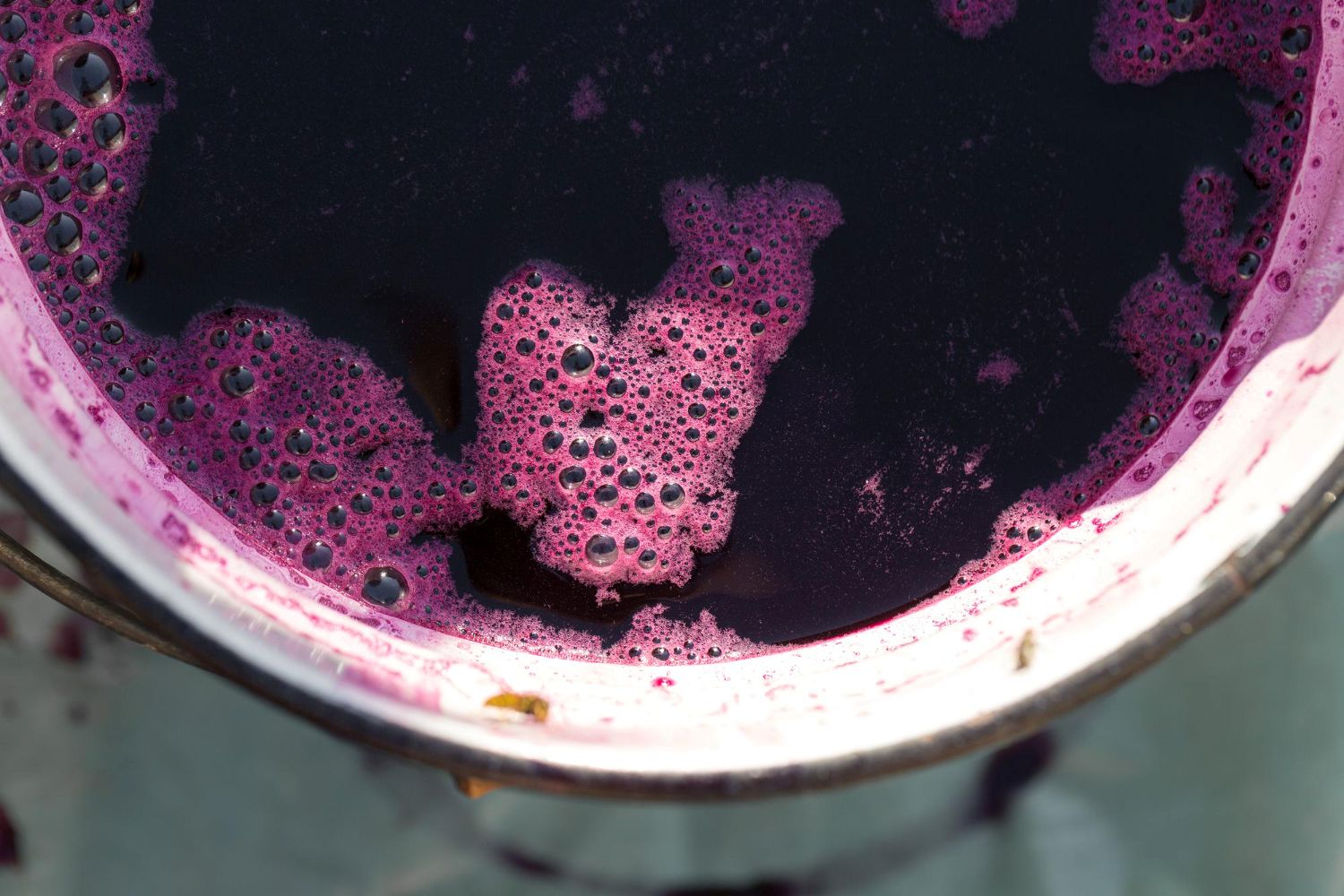
Il chitosan in oenology It represents one of the most interesting natural innovations applied to winemaking. Derived from chitin, a substance found in crustacean shells and some fungi, chitosan is a polymer with excellent antimicrobial and clarifying properties. Thanks to its natural origin, it is particularly valued in modern winemaking practices, which aim to reduce the use of synthetic substances while ensuring the microbiological safety and visual stability of the wine.
Content index
Chitosan in enology: origin, structure, and uses in the food sector
Il chitosan in oenology It is a polysaccharide obtained by deacetylation of chitin. Traditionally extracted from crustacean shells, in oenology its fungal form is now preferred, coming from selected strains of Aspergillus nigerThis also makes it suitable for organic and vegan winemaking, thanks to its traceability and absence of allergens.
From a chemical point of view, the chitosan in oenology It is characterized by the presence of free amino groups, which give the polymer a positive charge in aqueous solution. This property underlies its ability to interact with the cell walls of microorganisms, altering their permeability and causing their death. Furthermore, the positive charge also allows for effective interaction with negatively charged compounds present in the must or wine, promoting flocculation and sedimentation.
In addition to winemaking, chitosan is used in the food industry as a preservative, in regenerative medicine for its biocompatibility, and in water purification for its ability to bind heavy metals and impurities.
Antimicrobial activity: a natural weapon against Brettanomyces and lactic acid bacteria
One of the most significant uses of the chitosan in oenology concerns its antimicrobial action. It is known for its effectiveness in counteracting the development of Brettanomyces brusselsensis, one of the most feared unwanted yeasts in the cellar for the production of volatile phenols responsible for organoleptic defects such as the smell of horse sweat or plaster.
Chitosan's action occurs by damaging the cell membranes of microorganisms, inhibiting nutrient absorption, and reducing osmotic integrity. These properties make it a valid alternative to sulfites or other chemical preservatives, especially during delicate stages such as barrel maturation or pre-bottling storage.
Besides Brettanomyces, chitosan in oenology It is also active on a wide range of lactic acid bacteria, including Lactobacillus e Pediococcus, responsible for abnormal fermentations, late refermentations, and the production of volatile acidity. Its use is therefore essential for maintaining the aromatic integrity and microbiological stability of wines, especially in conditions of reduced sulfur dioxide availability.
Clarifying and stabilizing function: an effective alternative to animal proteins
Another area in which the chitosan in oenology Its most widely used form is for clarification. Its flocculant properties allow it to aggregate colloidal particles, unstable proteins, polysaccharides, and heavy metals, facilitating their sedimentation. This helps improve wine clarity, reduce colloidal and protein instability, and prevent clouding during storage and after bottling.
Chitosan can also be used synergistically with other fining agents, such as bentonite, plant proteins, or silica, enhancing their effectiveness and helping to selectively remove unwanted compounds. This is particularly important in white and rosé wines, where visual brilliance is a key quality factor.
Compared to other fining agents of animal origin, such as casein, albumin or gelatin, chitosan does not pose any allergenic risks and meets the needs of producers oriented towards vegan or certified organic practices.
Practical applications and operational considerations in the cellar
Use of the chitosan in oenology It requires precise dosage and application to ensure its effectiveness. Typical doses range from 5 to 20 g/hL, depending on the type of wine, the level of microbial contamination, and the desired effect (clarifying or antimicrobial).
The fungal form of chitosan is available in powder or ready-to-use liquid form and is generally added during the maturation or pre-bottling stages. It is essential to ensure good homogenization within the wine, with pumping over or gentle agitation, and to allow a minimum contact time of 5-10 days.
It is also important to comply with current regulations: Regulation (EU) 934/2019 authorises the use of fungal chitosan in wines, provided that it complies with certain purity standards and does not alter the organoleptic characteristics of the finished product.
Finally, chitosan and its floccules are removed by simple racking or filtration, leaving no unwanted residue. There are no known side effects on the color, bouquet, or flavor of the wine, making this adjuvant particularly popular with winemakers and cellar technicians.
A sustainable tool for the winemaking of the future
Il chitosan in oenology It has proven to be a valuable resource for those seeking natural, effective solutions compatible with a sustainable production model. Its antimicrobial properties reduce the use of sulfites, improving the healthiness of the wine and meeting the demands of a market increasingly focused on quality and naturalness. At the same time, its clarifying action promotes the stability and clarity of the finished product, without compromising its organoleptic properties.
Alea Evolution, in its constant commitment to provide cutting-edge technological and biotechnological solutions, includes in its catalog products based on highly purified fungal chitosan, certified for oenological use. The company offers technical support for the correct use of these adjuvants, promoting more efficient, safe, and natural winemaking management.